History of AfricaHistory of Africa begins in the 4th millennium BC...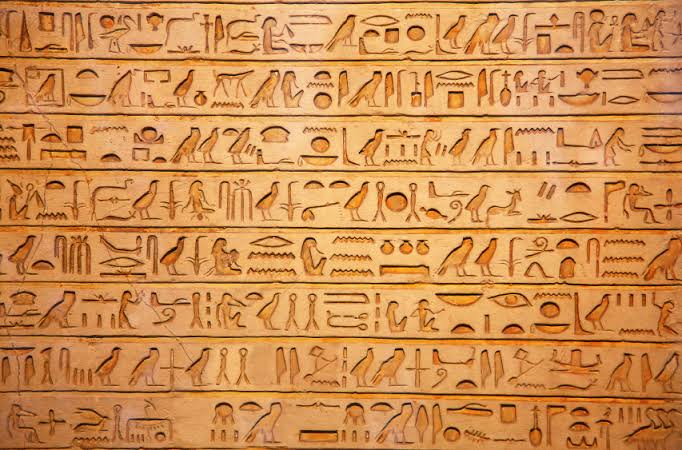 حسني بن بارك, CC BY-SA 4.0, via Wikimedia Commons
The written History of Africa begins in the 4th millennium BC with the rise of Egyptian civilization. Over the centuries, many diverse societies began flowing into the continent ingenerating a variety of cultures and religions that spread across the different regions of Africa. Early Foreign OccupationThe Romans colonized all of North Africa in the first century BC, spreading Christianity throughout the large areas of the region as far south as Kush and Ethiopia. However, the spread of Islam began in the late 7th century in North and East Africa leading to new cultures such as those of the Swahili in East Africa and the Songhai Empire in the sub-Saharan west. 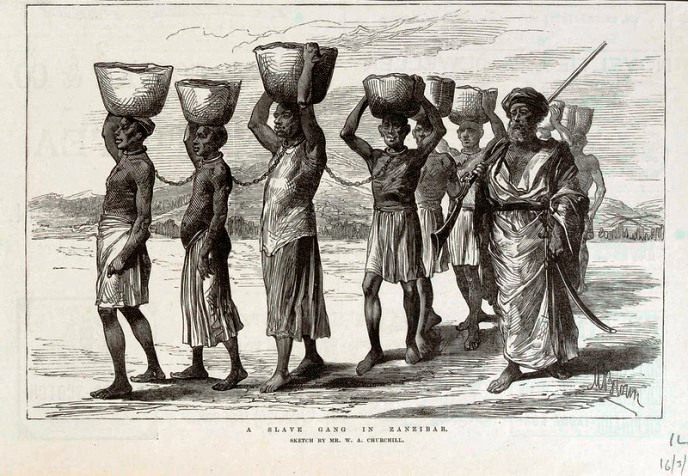 A slave gang in Zanzibar during the Arab slave trade The rise of Islam generated an increase in the Arab slave trade, which culminated in the 19th century and eventually led to the forced transport in the Atlantic slave trade and the beginning of European colonization throughout Africa, which had dramatic effects on the history of Africa. In West AfricaThe Muslim north had little influence on the independent kingdoms in the forested regions of West Africa. The Ife government, the first of the Yoruba city-states was established under a priestly king and was the religious and cultural centre of the region. At the beginning of the 14th century, Yorubaland established a community east of Ife that developed in the Benin Empire. Benin became an independent trading power by the 15th century, cutting off Ife’s access to coastal ports. Benin encompassed much of southeastern Yorubaland and the western Igbo by the 16th and 17th centuries. The Bantu MigrationsThe Bantu people had settled the area south of the Limpopo River by the 4th or 5th century, displacing and absorbing the Khoi-San speaking peoples who migrated slowly southwards. In the Eastern Cape Province, the southernmost group is the Xhosa people, who incorporate certain linguistic traits from the earlier Khoi-San people. 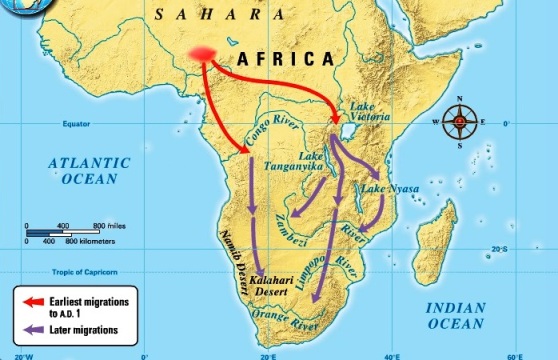 Bantu migrations into Eastern and Southern Africa Settlers in Southern AfricaIn 1487, Portuguese explorer Bartolomeu Dias made his stamp on the history of Africa by becoming the first European to reach the southernmost tip of Africa. In 1652, the Dutch settled in the Cape of Good Hope area and established a portal between Europe and the East on behalf of the Dutch East India Company. The region was seized by Great Britain in 1795 to prevent the French from taking control of it but also to use Cape Town as a stopping point en route to Australia and India. The Dutch regained possession in 1803 but when the Dutch East India Company declared bankruptcy, the British annexed the Cape Colony in 1806. The Partitioning of AfricaBy the mid-19th century, Protestants were carrying on missionary work on the Guinea coast in South Africa and in the Zanzibar dominions. The missionaries became explorers or agents of trade and colonialism. In the last quarter of the 19th century, lines of partition were drawn across Africa marking possessions of Germany, France, Britain and other Great Powers. 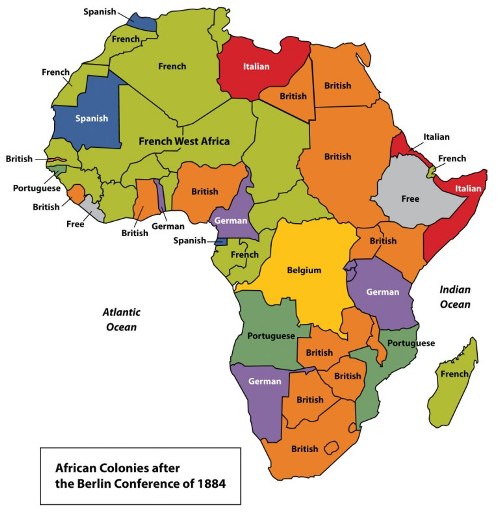 None of the African countries were consulted during the partitioning and an “International Treaty” was signed that disregarded the ethnic, social and economic composition of the people living in the area. This has has been the cause of endless years of ethnic or “tribal” conflict as the African countries have fought to gain their independence back. African history is harsh and brutal - even to this day conflict exists in between the African tribes and the different ethnic groups. More Topics on AfricaClick on the links below for detailed information on these topics relating specifically to Africa.. Click on the links below for detailed information on these topics relating specifically to Zimbabwe..
Activities of Historical Interest in Victoria Falls

|
Follow!
           |
||||
|
|
|||||
|
|
|||||
|
| |||||