Zimbabwe AnimalsZimbabwe is blessed with wonderful wildlife areas, that still have a rich and plentiful supply of wild animals.
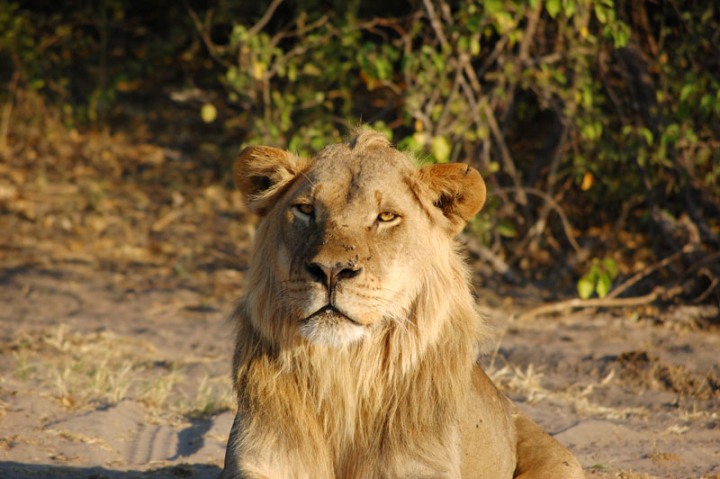
Zimbabwe with its diverse landscape is home to some of Africa's largest game reserves. Within these reserves or national parks, there is a wide variety of animals, from the desert pigmy mouse through to the largest land mammal - the African Elephant. For this reason Zimbabwe, is considered to be one of the best safari destinations in Africa. On a safari in Zimbabwe guests will get to see a great number of these animals. It is also possible to see all of the "Big Five" although rhino are extremely rare these days and can only be found in certain game parks. Loss of habitat and rampant poaching are the biggest threat to Zimbabwe's animals. Corruption and complete mismanagement by the Zimbabwe National Parks Authority, which was once a leading light in animal conservation, has been a contributing factor to this destruction. Fortunately independent organisations have stepped in, to setup and maintain conservation programs and anti-poaching units. These gallant organisation have, against the odds saved Zimbabwe's wildlife to a certain extent. The battle is ongoing, relentless and far from won, but we applaud them for all that they have done and are doing to save Zimbabwe's animals. Introducing the "Big Five" of Zimbabwe AnimalsThe phrase Big Five game was coined by big game hunters to the five most difficult animals in Africa to hunt on foot. The term is still used in most tourist and wildlife guides that discuss African wildlife safaris. The "Big Five" consists of the Lion, the African Elephant, the Cape buffalo, the Leopard and the Rhinoceros. Below we have gone into further detail about some of the bigger and more well-known animals in Zimbabwe. If you click on the blue links, you will find even greater detail, highlighting some of the more interesting facts about each animal. Zimbabwe AnimalsLion – (family Felidae) – Panthera LeoPrides consist of a group of four to twelve related females and one to six males, unrelated to the females. The lion will hunt collectively and individually: one animal sets up the charge and drives the prey toward other members of the pride, which then ambush the prey. Most hunting is done by the females. Their favoured prey is wildebeest, buffalo, giraffe, zebra, porcupines and warthogs. The habitat of lion is woodland and open savanna.
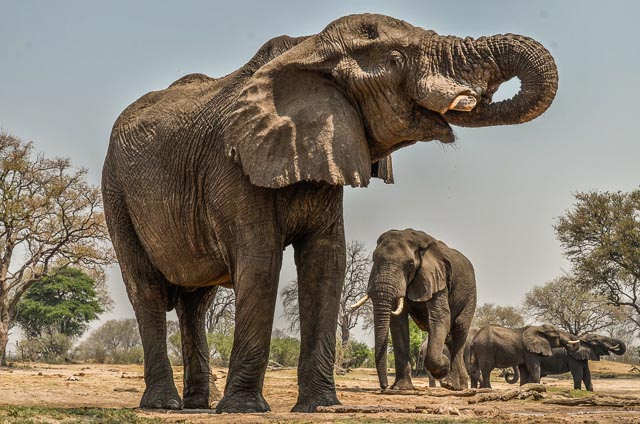
Lion - Panthera Leo Elephant – (order Proboscidea) – Loxodonta AfricanaThe African elephant is the world’s largest living land mammal. Its nose and upper lip elongated into a trunk. Both males and females usually have a pair of tusks growing down and forwards from their upper lip. Their ears are very large. Elephants are almost hairless with rough grey skin, often coloured by dust or mud. They can stand approximately 3,2 m high and weigh up to 6 metric tons. They have poor eyesight and hearing but a very keen sense of smell. Elephants can survive in a wide variety of habitats, their main requirements being a plentiful supply of fodder and access to unpolluted water. They are exclusively herbivorous, requiring up to 300kg of fodder daily. They may eat more grass in years of good rainfall and are especially partial to the ripe fruits of the vegetable ivory palm, the wild almond and the marula.
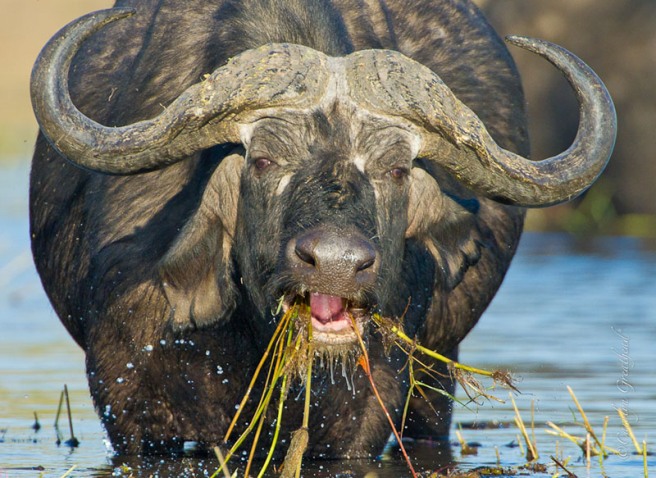
Elephant - Loxodonta Africana Buffalo – (family Bovidae) – Syncerus cafferThe buffalo has curved horns in both sexes that rise from heavy bosses, spread out and downwards, then curve up and inwards. They are brownish-grey, darkening with age. Males are heavier (up to 800kg) than females. The bulls are known to be extremely aggressive when threatened or wounded. Some herds of buffalo can go up to thousands - and you will find both females and males in a herd together. Buffalo are almost exclusively grazers and will graze on most grass species. The herds split up into smaller units and disperse over wide areas during the rainy season and regroup after the end of the rains near permanent water supplies.
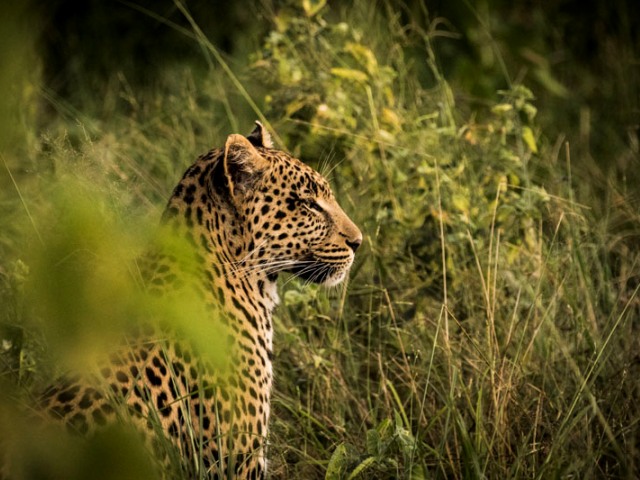
Buffalo - Syncerus caffer Leopard – (family felidae) – Panthera PardusThe leopard is pale yellow-gold with dark spots, those on the flanks arranged in rosettes. Their legs are strongly built and they have a long tail. Leopards are mainly nocturnal, especially in areas of human development. They are solitary and very territorial. They rest in trees, thick cover or caves. Their prey impala, bushbuck, reedbuck, monkeys, is stalked and rushed from short range and killed by bites to the back or neck, skull or throat. They will then often hoist the carcass into a tree and feed over several days. A cornered or wounded leopard is one of the most dangerous of all African mammals and will launch a fierce attack which may prove fatal. The leopard is common, though elusive, throughout much of Zimbabwe, and can be found in most major National Parks but the best-known leopard population, is in the Matobo Hills.
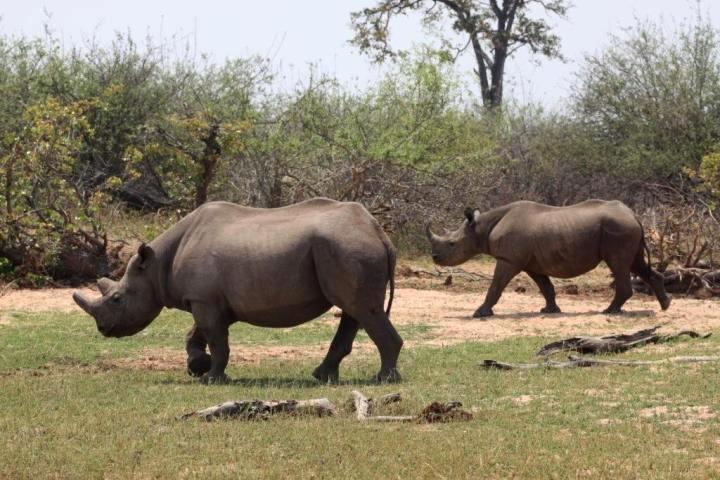
Leopard - Panthera Pardus Rhinoceros – (family rhinocerotidae) – White – Ceratotheriumsimum, and Black - DicerosbicornisA rhino stands up to 1,8m at the shoulder and weighs up to 2 tons, the grey-coloured white rhino is the second-largest land animal after the elephant. The white rhino is distinguished from the black by its square upper lip, pronounced nuchal hump, heavier build and longer and narrower head. The white rhino is a grazer and prefers fairly flat terrain with areas of short grass adjacent to dense bush. It drinks and wallows regularly and is usually found close to water. The black rhinoceros is a browser usually found in woodlands and scrub, forests, riverine woodlands and dense bush, within about 15kms of water. It is generally solitary. Rhinos are classified under Appendix One of the International Convention on Trade in Endangered Species.
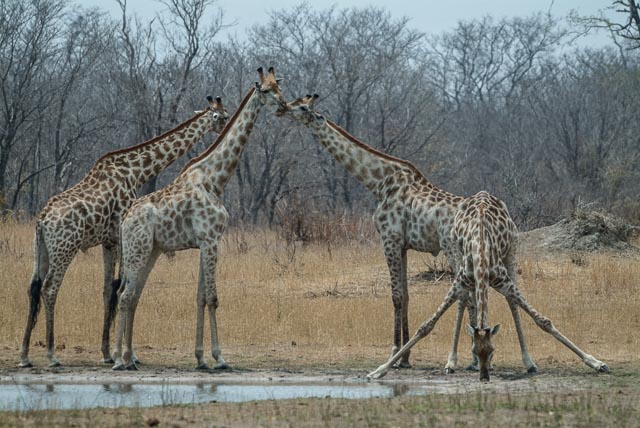
Rhinocerous Other Zimbabwe AnimalsGiraffe - Family Giraffidae - Giraffa giraffaWorth mentioning for their size and awe are the giraffe. Zimbabwe is home to two species of giraffe - the Cape or South African giraffe found mostly in the southern part of the country, and the Angolan or Namibian giraffe, found mostly in western Zimbabwe.
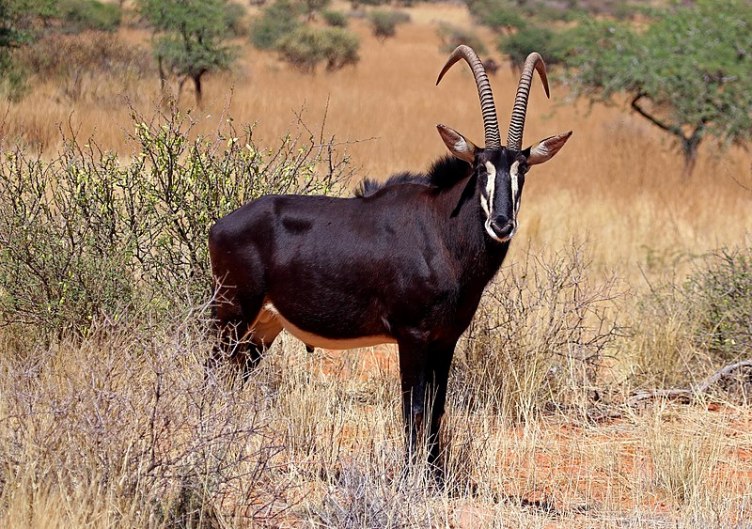
Giraffe - Giraffa giraffa Sable Antelope - family Bovidae - Hippotragus nigerThe sable antelope is the national symbol of Zimbabwe. The sable is found throughout southern African as well as areas up to Kenya in east Africa. A close relative, the roan antelope, can also be found in Zimbabwe. This one is brown in colour, while the sable antelope is mostly black.
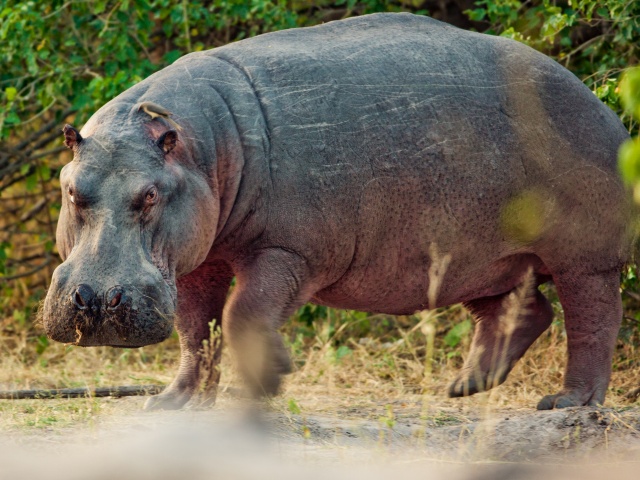
Sable antelope - Hippotragus niger Hippopotamus - family Hippopotamidae - Hippopotamus amphibiusThe third largest animal that you can find in Zimbabwe, and indeed Africa, is the hippopotamus. The hippo is found not only in major rivers such as the Zambezi, but also in areas where water sources are found, such as pans in Hwange National Park. Possibly the most dangerous animal to be around in the wild, the hippo has appeared in the press for attacks on canoes.
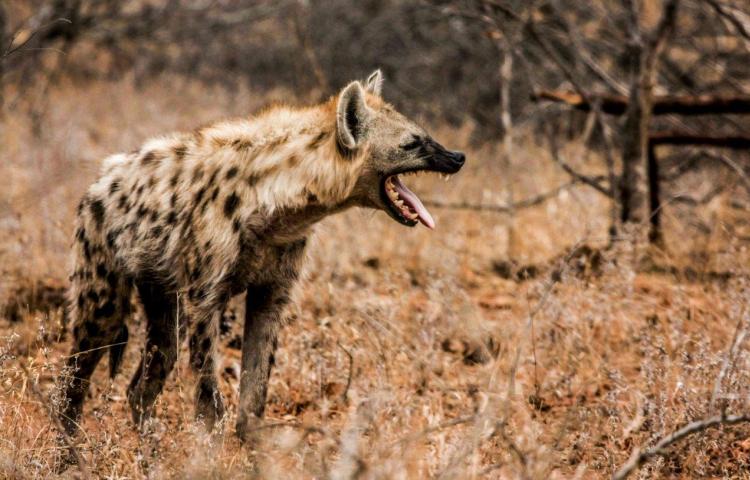
Hippopotamus - Hippopotamus amphibius Hyaena/Hyena - family Hyaenidae - Crocuta CrocutaA bit misunderstood and often overlooked is the hyena. Being viewed as pests, often killing livestock around farming areas they have been heavily persecuted in the past. Once widespread throughout large tracts of Africa, only being absent from dense forests and extreme desert areas, the hyena distribution is now very much confined to protected wildlife zones. Hyena are incredibly social and complex animals. They are often given a bad name as dirty scavengers that skulk around in the darkness. This is not true; they are very successful hunters and in some areas, lions will actually scavenge from hyena. There are four distinct types - the Spotted, Brown and Striped hyenas, and the Aardwolf.
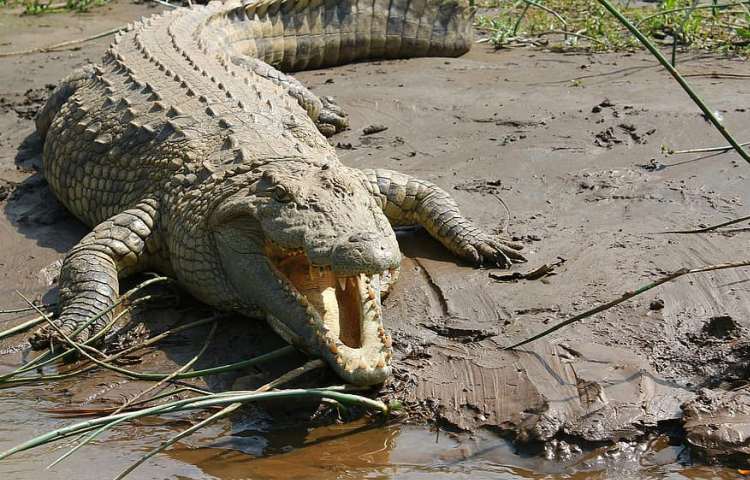
Spotted hyena - Crocuta Crocuta Nile Crocodile - family Crocodylidae - Crocodilus NiloticusThese prehistoric reptiles have inhabited the waters of Earth for over 95 million years. Ancestors of the Archosaurs 'the ruling lizard' of the Early to Late Triassic period 250 million years ago, they outlived the Dinosaurs. Once crocodiles evolved into the form we know today, they changed very little in the following millions of years. Crocodiles are amazingly clever animals. Their hunting strategy is fairly wide depending on the individual's size, the most well know is the large adults employing stealth and patience at the water's edge, hoping for an unsuspecting animal to wander down to drink.
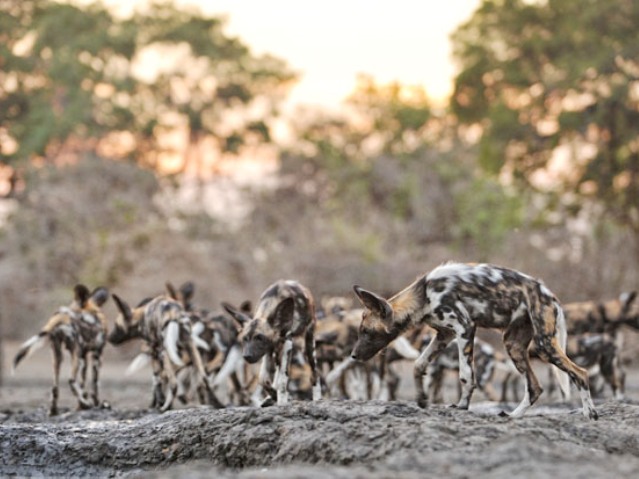
Nile Crocodile - Crocodilus Niloticus Worthy MentionsOne of the widely found animals and a favourite among safari goers is the plains zebra. Other game found in Zimbabwe include kudu, waterbuck, bush buck, impala, nyala, gemsbok, eland and other antelope species. Predator species include the African wild dog and cheetah.
African Wild Dog - Lycaon pictus For more details on Zimbabwe animals you might like to look at this interesting page Wikipedia Zimbabwe animals

|
Follow!
           |
||||
|
|
|||||
|
|
|||||
|
| |||||