Hwange vs Chobe: Which Offers the Best Safari from Victoria Falls?
If you are planning a safari from Victoria Falls, you are fortunate to have two of southern Africa's finest wildlife destinations within easy reach: Hwange National Park in Zimbabwe and Chobe National Park in Botswana.
Both parks offer excellent game viewing, particularly elephants, but the safari experiences are quite different. Chobe is known for its river-based wildlife viewing and is an ideal day trip from Victoria Falls, while Hwange offers a more remote wilderness experience, best enjoyed over several days.
So, which is the better safari from Victoria Falls – Hwange or Chobe?
To help you decide, we've compared the wildlife experiences, visitor numbers and practical differences between these two remarkable national parks.
Hwange vs Chobe: Two Very Different Safari Experiences
Although both parks are within easy reach of Victoria Falls and support exceptionally large elephant populations, the actual safari experience in each is quite different.
Chobe National Park: River Safaris and Concentrated Wildlife
Chobe National Park, particularly the famous Chobe Riverfront, is all about the water. Game viewing here combines open 4x4 game drives with boat safaris along the Chobe River.
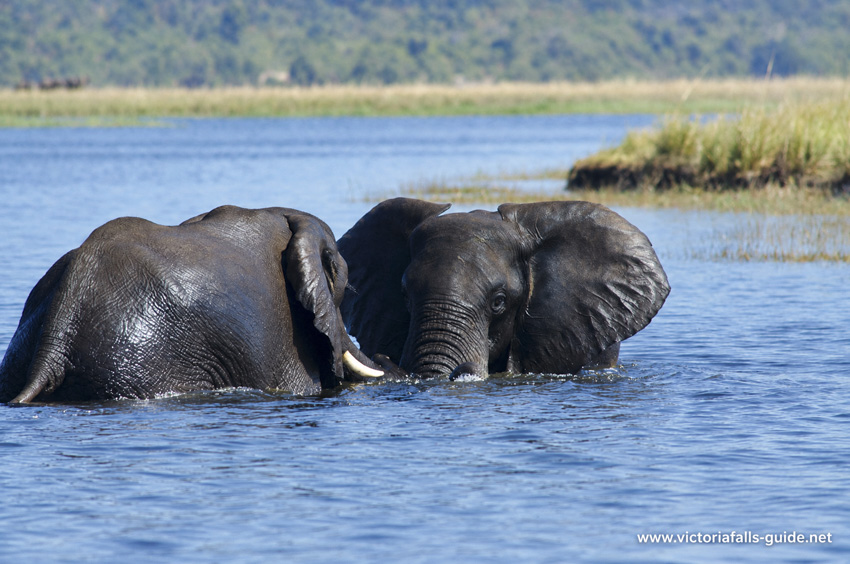
There is nothing quite like watching a herd of elephants swimming across the river, their trunks raised like snorkels!
The permanent water attracts large concentrations of wildlife, particularly during the dry season, making game viewing exceptionally rewarding.
However, Chobe is also a victim of its own success. The Riverfront is highly developed and extremely popular, attracting large numbers of day-trippers and organised tour groups. At busy times, you can find several safari vehicles gathered around the same wildlife sighting.
Hwange National Park: Wilderness and Waterhole Viewing
Hwange National Park, on the other hand, offers a more traditional African wilderness experience. It is an enormous, sprawling park, with extensive areas of undeveloped bush and a number of private or exclusive-use safari areas in and around the park.
In these quieter areas, you may spend hours on a game drive without encountering another vehicle.
Unlike Chobe, which has the permanent Chobe River, Hwange relies heavily on underground water pumped into artificial pans, particularly during the dry season.
One of the great pleasures of a Hwange safari is simply sitting quietly at a waterhole hide, watching the wildlife come to drink. During the dry months, elephants, buffalo and other animals gather around these water sources, often providing extraordinary viewing without having to travel far.
Hwange vs Chobe: The Numbers Compared
The differences between the two parks become particularly interesting when we look at their size, visitor numbers and the concentration of safari vehicles.
A note about the figures: The statistics below have been drawn from various studies and published reports. They may not all be completely accurate or up to date, and different sources may use different methods of measurement. We've included them as a general guide to illustrate the relative differences between the two parks, rather than as exact figures.
- Park size: Hwange covers approximately 14,650 square kilometres, with around 480 km of roads. Chobe covers approximately 11,700 square kilometres, but its main game-viewing area, the Chobe Riverfront, is concentrated within roughly 402 square kilometres, with around 325 km of roads.
- Visitor numbers: In 2019, Chobe reportedly welcomed over 420,000 visitors. During peak months such as July and August, visitor numbers can exceed 50,000 per month. By comparison, Hwange has averaged around 43,000 visitors annually.
- Safari traffic: Chobe's Kasane gate reportedly handles an average of more than 120 commercial vehicles per day. Hwange's Main Camp sees approximately 20 to 30 vehicles daily, more than half of which are private vehicles. On the water, Chobe has around 700 registered vessels associated with a 50 km stretch of river.
These figures illustrate why the safari experiences can feel so different. Chobe's Riverfront offers concentrated wildlife viewing within a relatively accessible area, while Hwange provides considerably more space and opportunities to escape the crowds.
For visitors who value solitude, Hwange also offers guided walking safaris in permitted areas, where it is possible to explore the bush without seeing another person for miles.
The Bigger Picture: KAZA and Africa's Elephants
Victoria Falls sits at the heart of the Kavango-Zambezi Transfrontier Conservation Area (KAZA TFCA), the world's largest transfrontier conservation area, covering approximately 520,000 square kilometres (200,000 square miles) across five southern African countries.
We often see itineraries that treat Victoria Falls as a brief add-on to a safari elsewhere in Africa. Yet this region is itself one of the continent's most important wildlife destinations.
Hwange and Chobe are major components of KAZA, which supports the world's largest remaining population of African savanna elephants.
The 2022 KAZA Elephant Survey estimated the population at 227,900 elephants, representing more than half of Africa's remaining savanna elephants.
Elephants are undoubtedly one of the region's greatest attractions, but the parks also support an impressive range of other wildlife, including lion, leopard, cheetah, hyena, African wild dog, buffalo and numerous antelope species.
Hwange's Remarkable Elephant Population
Hwange alone is estimated to support around 46,000 elephants, equivalent to approximately 3.1 elephants per square kilometre.
For comparison, reported elephant densities in the Masai Mara, Kruger and Serengeti are approximately 2.4, 0.71 and 0.14 elephants per square kilometre respectively.
These figures help illustrate the importance of Hwange as an elephant habitat, although actual wildlife concentrations vary considerably throughout the park and across the seasons.
During the dry winter months, elephants congregate around Hwange's waterholes, sometimes in herds numbering in the hundreds. Watching these gatherings is one of the park's great safari experiences. For more on seasonal wildlife movements, see our month-by-month Victoria Falls safari guide.
Which Safari Should You Choose from Victoria Falls?
If you have the time, our recommendation is to visit both. They complement each other extremely well, offering two distinct wildlife experiences within relatively easy reach of Victoria Falls.
Chobe offers the opportunity to view wildlife from both land and water, while Hwange provides a quieter, more expansive wilderness experience.
Short on Time? Choose a Chobe Day Trip
Chobe is an excellent choice for a day trip from Victoria Falls. You can cross into Botswana, enjoy a game drive and a boat safari on the Chobe River, and return to your Victoria Falls hotel that evening.
Have a Few Nights? Spend Time in Hwange
We recommend spending at least two or three nights in Hwange. A park of this size deserves time, and much of its appeal lies in slowing down and enjoying the rhythms of the bush. Explore our guide to Hwange safari lodges and accommodation when deciding where to stay.
Both parks offer outstanding wildlife experiences. The best choice ultimately depends on how much time you have available and the type of safari you enjoy.
If you're planning a longer safari, there's more to consider than just choosing between Hwange and Chobe. Our African Safari guide covers the important decisions, including when to travel, choosing the right camps, budgeting and how long to spend at each destination.
Frequently Asked Questions About Hwange vs Chobe
Is Hwange or Chobe better for a safari?
Neither is universally better. Chobe's Riverfront is ideal for a day trip and combines boat safaris with game drives. Hwange is a better choice for travellers wanting a quieter wilderness experience over two or three nights.
Can I visit Hwange and Chobe on day trips from Victoria Falls?
Chobe is a popular full-day trip from Victoria Falls, combining a river cruise and game drive. Parts of Hwange can be visited on a long day trip, but we recommend at least two or three nights to appreciate the park properly.
Which park is better for seeing elephants, Hwange or Chobe?
Both parks are excellent for elephants, especially in the dry season. Chobe offers the chance to see elephants along and sometimes crossing the river, while Hwange is known for large gatherings around its waterholes.
When is the best time to visit Hwange and Chobe?
The dry season, particularly July to October, generally offers the most concentrated wildlife viewing around rivers and waterholes. The wetter green season is also rewarding for scenery, birds and young animals. See our safari seasons guide for more detail.
Is Chobe more crowded than Hwange?
Chobe's popular Riverfront can be busy with vehicles and safari boats, especially in peak season. Hwange is much more extensive and offers opportunities for quieter game viewing, although experiences vary by area and lodge.
Do I need a visa to visit Chobe from Victoria Falls?
Visa requirements depend on your nationality. A Chobe day trip involves crossing from Zimbabwe into Botswana and returning, so check Botswana entry rules and whether you need a new Zimbabwe visa or suitable multiple-entry permission for your return.
Let Us Help You Plan Your Safari
If you are visiting Victoria Falls and would like to include a safari in Hwange, Chobe or both, we would be happy to help you work out the best itinerary.
Tell us how many days you have available, whether you are travelling with children or older family members, and the type of accommodation and safari experience you prefer.
We live in Victoria Falls and know these destinations well. We can help you choose the right lodges, arrange transfers and activities, and put together an itinerary that makes the most of your time in the region.
Free local advice • Personalised recommendations • No obligation
New to safaris? Our first African safari guide has practical advice to help you prepare.